Kitchens continue to evolve far beyond their traditional role. In 2026, they are expected to be more intelligent, more sustainable, and more visually refined than ever before. For homeowners, interior designers, architects, and property developers, the kitchen is no longer just a functional room — it is a key part of the home’s identity, lifestyle, and value.
At Visual3D, we use high-quality 3D rendering to help clients explore and present kitchen concepts before they are built. From early layout decisions to final materials, lighting, and finishes, 3D visualization makes it easier to refine ideas and communicate them with confidence.
In this article, we explore the leading kitchen design trends for 2026 and how 3D kitchen rendering helps bring them to life.
Smart technology continues to shape modern kitchen design. Appliances are becoming more connected, more intuitive, and more seamlessly integrated into the space. Refrigerators with digital interfaces, ovens with remote control functions, touchless faucets, automated lighting, and voice-assisted systems are now part of the contemporary kitchen experience.
With 3D rendering, these smart features can be visualized in context. Designers and clients can see how appliances fit into the cabinetry, how smart lighting affects the mood of the room, and how the layout supports convenience and usability. This makes it easier to plan a kitchen that feels both modern and practical.

Sustainability remains one of the strongest influences in kitchen design for 2026. Homeowners and developers are placing greater emphasis on environmentally responsible materials and energy-efficient solutions. Recycled wood, bamboo, low-VOC finishes, water-saving fixtures, and efficient appliances are becoming standard choices in thoughtful modern interiors.
3D rendering helps communicate these sustainable design decisions clearly. It allows clients to compare materials, evaluate the visual impact of eco-friendly finishes, and create a design that balances aesthetics with environmental responsibility. When sustainability needs to be both functional and attractive, visualization becomes a valuable part of the design process.
Minimalist kitchens continue to be highly relevant in 2026. Clean lines, uncluttered surfaces, concealed storage, and integrated appliances create spaces that feel calm, elegant, and efficient. This style is especially appealing in modern homes where simplicity and usability go hand in hand.
Through 3D rendering, minimalist kitchen concepts can be refined with precision. Every cabinet line, texture, handle, and lighting detail can be tested visually before execution. This helps ensure the kitchen remains clean and refined without losing warmth or character.
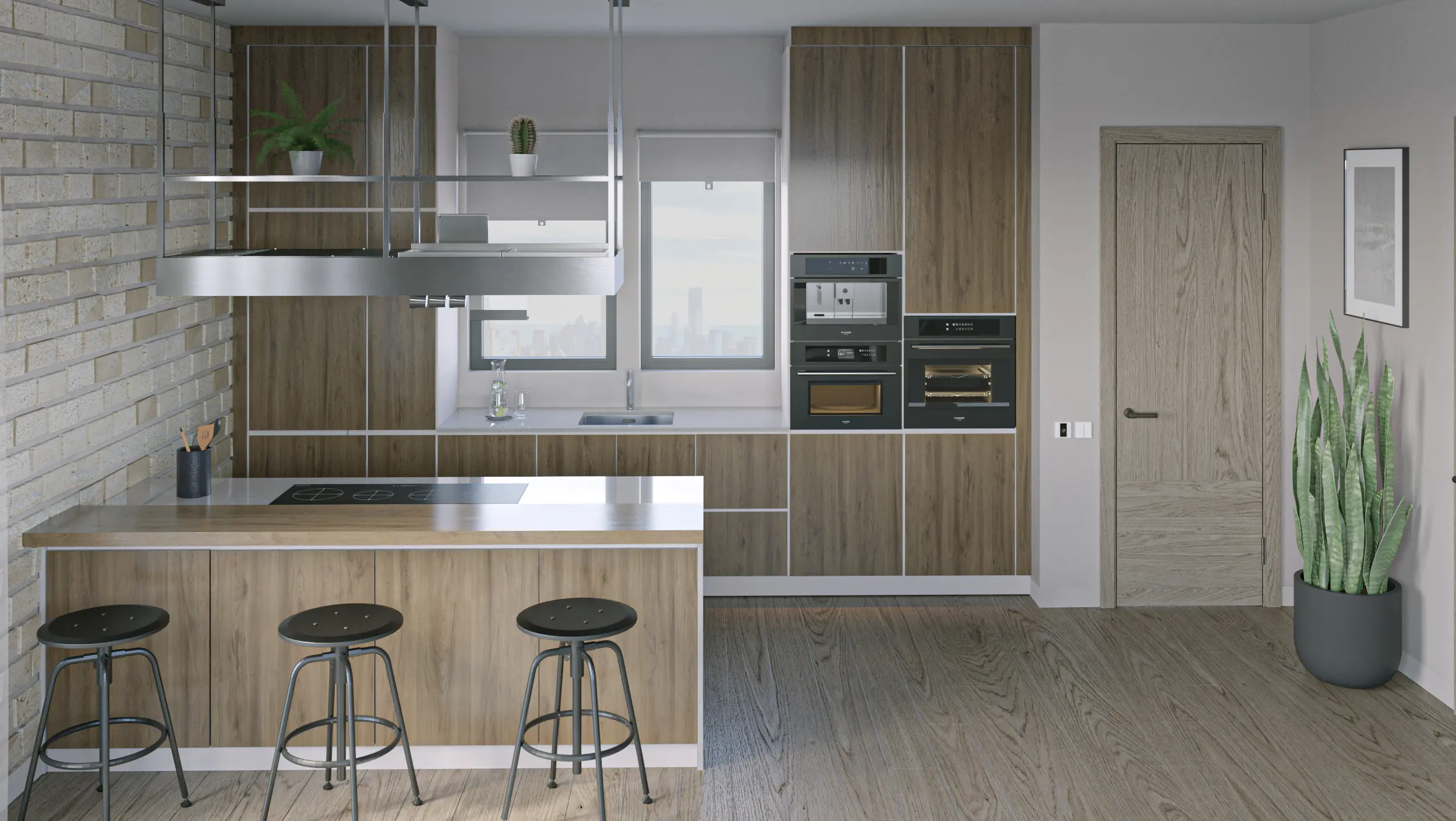
The kitchen is increasingly designed as part of a larger social and living environment. Open-plan layouts remain popular because they support interaction, improve light flow, and create a more connected home. In many modern interiors, the kitchen now blends naturally with dining and lounge areas.
3D rendering is particularly useful in open-concept design because it helps clients understand the relationship between spaces. It becomes easier to evaluate circulation, furniture placement, zoning, sightlines, and the balance between openness and structure. This is especially important when designing kitchens that serve multiple functions throughout the day.
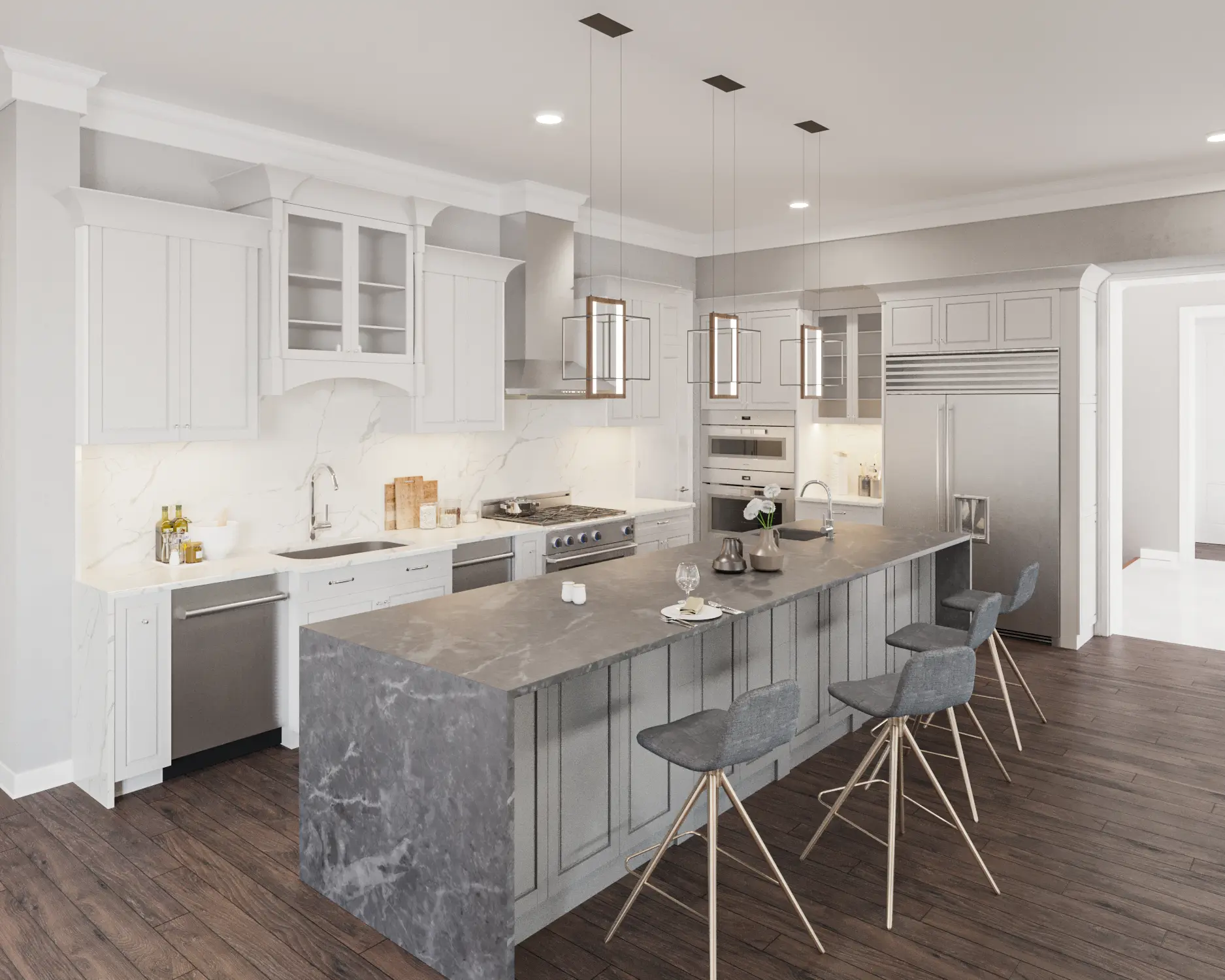
In 2026, kitchen design continues to move toward higher-quality materials and more considered finishes. Quartz, natural stone, rich wood textures, brushed metals, textured cabinetry, and elegant wall finishes all contribute to a more premium feel. Clients are increasingly drawn to kitchens that feel durable, timeless, and visually sophisticated.
3D rendering makes these design choices much easier to evaluate. Rather than imagining how certain materials might work together, clients can see realistic compositions before committing. This helps improve decision-making and supports a more polished final result.
%20copy.webp)
Personalization is one of the most important trends in contemporary kitchen design. Clients no longer want generic spaces — they want kitchens that reflect their lifestyle, taste, and practical needs. This includes custom cabinetry, tailored storage, unique material palettes, and layouts designed around how the space is actually used.
At Visual3D, we see this trend across both residential and commercial projects. 3D rendering allows clients to explore custom solutions more clearly and confidently. It becomes easier to test options, compare alternatives, and create a kitchen that feels specific rather than standard.
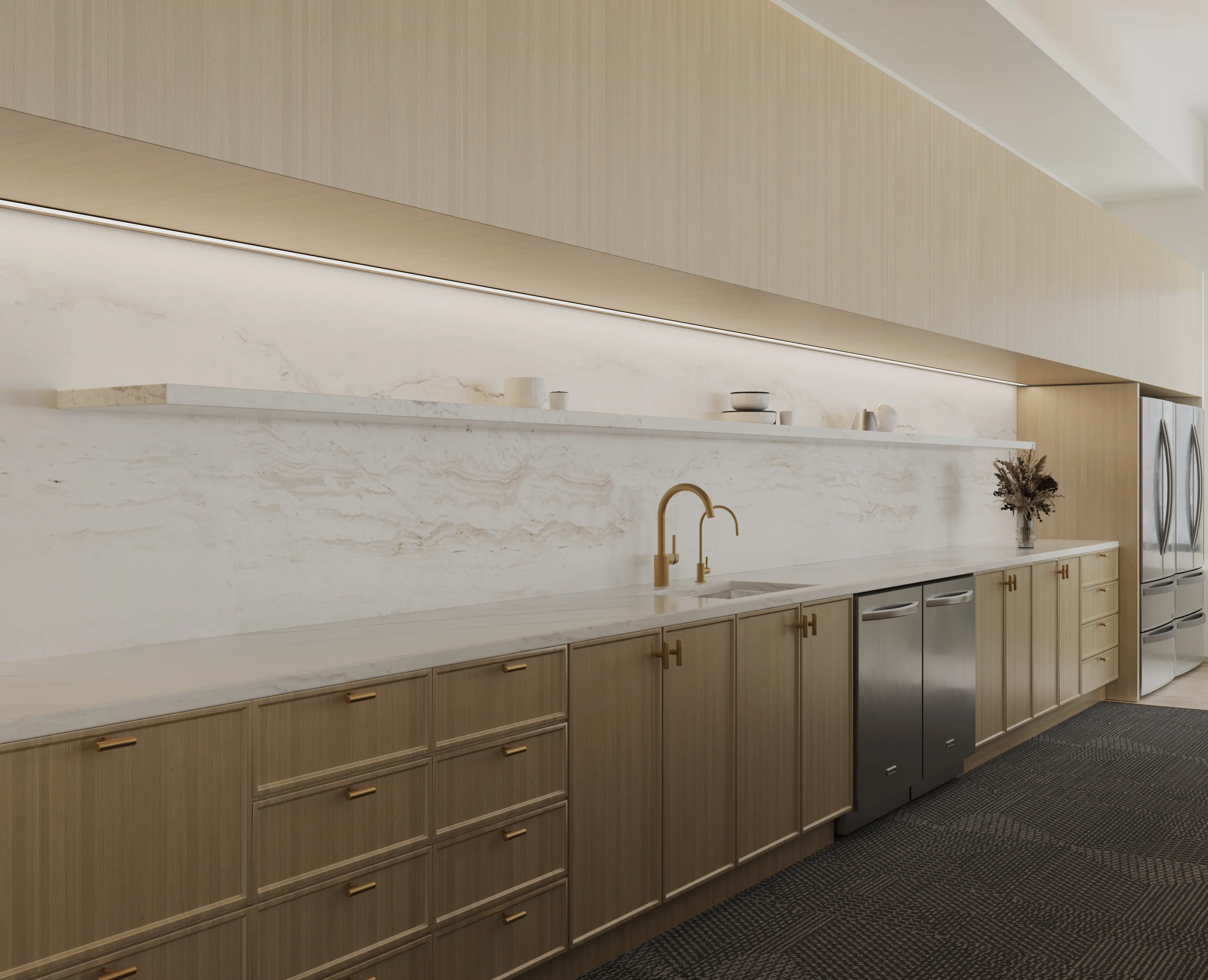
Lighting has become a defining design element rather than just a technical necessity. In 2026, kitchen lighting is expected to do more than illuminate work surfaces — it should also create atmosphere, highlight materials, and support the overall style of the space.
Popular solutions include under-cabinet lighting, integrated LED details, pendant lighting over islands, accent lighting in shelving, and layered lighting strategies that combine function with visual depth. Through 3D rendering, these lighting scenarios can be tested before implementation. Designers and clients can evaluate how light interacts with textures, surfaces, and volumes throughout the kitchen.
Kitchen design involves many decisions, and small details can significantly affect the final outcome. Layout, storage, materials, lighting, technology, and finishes all need to work together. 3D rendering helps simplify this process by turning abstract ideas into realistic visual concepts.
For homeowners, it offers clarity and confidence.
For designers and architects, it improves communication and presentation.
For developers and brands, it creates stronger marketing visuals and more persuasive project presentations.
Instead of relying only on drawings or moodboards, clients can see the space before it is built.
Kitchen design in 2026 is shaped by a clear direction: smarter solutions, better materials, cleaner aesthetics, and more personalized spaces. Whether the goal is a minimalist residential kitchen, an open-plan family space, or a premium interior concept for presentation and marketing, 3D rendering plays a key role in bringing that vision to life.
At Visual3D, we create photorealistic kitchen renderings that help clients visualize design ideas with clarity, precision, and impact. From interior concepts to full residential presentations, our goal is to turn ideas into compelling visuals that support both design and decision-making.
If you are planning a kitchen concept and want to present it with clarity and confidence, Visual3D can help. We create high-quality 3D renderings for interiors, exteriors, and product visualization, helping architects, designers, developers, and brands bring ideas to life through compelling imagery.